Revealing My Home Server Specs and Current Configuration
Hello, this is Munou.
Since there aren't many people publishing their home server specs, I'll share my configuration here.
table { border-collapse: collapse; width: 100%; }
td, th { border: 1px solid #dddddd; text-align: left; padding: 8px; } tr:nth-child(even) { background-color: #f2f2f2; }HP Z240SFF Workstation Specs
| Item | Details |
|---|---|
| OS | GNU/Linux Devuan |
| CPU | Intel® Xeon® CPU E3-1225 v5 @ 3.30GHz |
| Memory | 8 GB |
| HDD | 2TB |
| SSD | 256GB |
Why I chose this configuration
It's because I happened to get this cheaply.
Around 7,000 yen.
Thanks to that, I luckily avoided the recent critical Intel CPU vulnerability. The vulnerability mentioned above only affects the Intel Core series, so my Xeon server is not affected. Plus, my custom-built PC uses Ryzen, so I consider this extremely good luck.
Honestly, I disliked Intel's recent 'just release a new generation' strategy, so I ignored the cost-effectiveness of i3 and, as a matter of personal passion, simply chose Ryzen, following Mr. Jim Keller's lead.
It seems he's been developing RISC-V recently, so perhaps we'll transition to the era of RISC-V.
Anyway, I've digressed, so let's get back to the topic.
If I were to install it on the system's OS, of course, NextCloud, which I set up for personal use, and eyes4you.org, which is a mirror of Wikipedia, wouldn't work due to insufficient capacity.
Therefore, I'm running them on a 2TB HDD.
I've placed the files for this site on an SSD, as I don't expect it to consume much storage.
Does SSD in rental servers really make a difference?
In fact, wanting to test the above was an additional reason for building a home server.
From a sales perspective, using SSDs is very attractive, but is it true?
I thought that communication speed, rather than storage, might be the bottleneck, so it might not make much difference in actual use. Indeed, this site runs smoothly.
However, it's more accurate to say this is thanks to the cache server on Vultr's VPS, which acts as a caching layer.
Right, if that's the case, then even if the main server isn't particularly fast, you could just rent a weak VPS, turn it into a cache server, and any site would become faster!
No, no, that's a bit simplistic. Balance is important in everything, and in my case, it just happened to work out well.
How much performance is being used?
Let's look at NextCloud's system status, which is easy to understand.
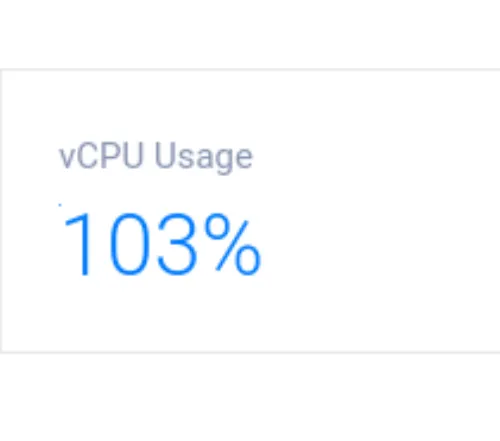
There's plenty of performance to spare. And the CPU usage of Vultr's VPS, which serves as the cache server, is hovering around 3% on the cheapest $5/month plan I could get, which is quite an overkill.
Lately, I've been wanting to do something new, but I can't seem to find anything else interesting. I almost wish someone would give me orders.
Please give me work.
That's all for now.
I look forward to your continued support.