Artix Linux Installation, UNIX Philosophy, and Site Optimization
For the websites I operate (including my main business), optimizing site performance takes a considerable amount of time, but that detour is well worth the effort.
If you become dependent on an e-commerce site, optimizing images also depends on the platform, and for SEO and users alike, a lightweight site is always better. Just a slight slowdown in site speed can drastically drop your search rankings.
The advantages of renting a server and operating it yourself include high maintainability and customization options, right?
Also, the low operating costs.
Even with credit card payments, a 3% transaction fee is excellent. (BASE also takes about 3% in transaction fees, plus another 3% elsewhere, right?)
Server costs are less than 1000 yen per month. And SSD servers are incredibly fast and impressive.
So, to boost domain authority, I started a lyric translation site.
https://lyrics.soulminingrig.com/
It's mostly for personal use, and since YouTube URLs seem to get blocked, I'm using about 80% of Invidious, an open-source, decentralized YouTube frontend.
https://invidious.io/
No ads, it's the best. Naturally, each instance probably uses a bulletproof VPS, so even if they get angry, an infinite number of instances will pop up like zombies. Decentralization is scary~.
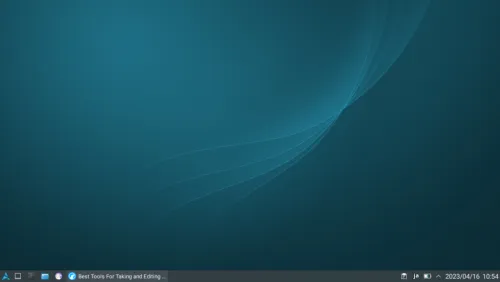
I installed Artix Linux, a minimal Linux distribution, on my ThinkPad X220.
Regarding the installation, I'm not very knowledgeable about Linux distributions, so I installed this based on what Technical Suwako said about her current OS.
I looked at other GNU/Linux distributions, but within my research, there were too many unnecessary things, or conversely, they were too minimal and seemed troublesome afterward. I'm not that knowledgeable, but I heard that using systemd is not good (*), so somehow I ended up with the same OS as Suwako.
*Apparently, it's because it's a centralized system and goes against the UNIX philosophy.
I read the UNIX philosophy, and it might be applicable to the real world too.
https://ja.wikipedia.org/wiki/UNIX%E5%93%B2%E5%AD%A6
Typing on the X220's scissor-switch keyboard again has doubled the fun.
This is how it should be, after all.
Chasing only the latest things just makes you tired.
Besides, consuming so many things doesn't lead to anything good.
Embracing new things as new, but not changing the parts you don't want to change – that's the best approach.
I've always fixed and used things I got from junk, and I was happy when someone first told me, 'That's good for the environment too.' (Thank you orz)
For now, I installed the power-saving package I first found on a Chinese site.
And LibreOffice too.
https://linrunner.de/tlp/index.html
I was surprised to realize that most of the browsers in the world are now Google-based.
I thought about using Firefox. But then I found out Google funds it and seems to be intentionally making it difficult to use to drive users away. Most other browsers are also Chromium-based.
It's truly terrifying when it comes to this point. I just thought 'Opera is Chromium-based!?' when I was in junior high.
Here's a copy-paste of the UNIX philosophy ☆
--
Gunkel's: The UNIX Philosophy
In 1994, Mike Gunkel (a member of the X Window System development team), drawing on his experience with UNIX and discussions with fellow programmers and UNIX users from other fields, created the following nine UNIX philosophies:
Small is beautiful
Make each program do one thing well
Build a prototype as soon as possible
Choose portability over efficiency
Store data in simple text files
Use software as a lever
Use shell scripts to increase leverage and portability
Avoid excessive interactive interfaces
Design every program as a filter
The following doctrines are considered to be of relatively lower importance, are not universally agreed upon as UNIX philosophies, and in some cases are still fiercely debated (e.g., monolithic kernel vs. microkernel).
Allow users to customize their environment to their liking
Keep the OS kernel small and lightweight
Use short, lowercase names
Save the forests
Silence is golden
Think concurrently
The sum of the parts is greater than the whole
Seek a 90 percent solution
Worse is better
Think hierarchically
Worse is better
--
Additional quotes below
--
-
“UNIX is simple. It just takes a genius to understand its simplicity.” - Dennis Ritchie
-
“UNIX was not designed to stop its users from doing stupid things, because that would also stop them from doing clever things.” - Doug Gwyn
-
“UNIX is user-friendly. It just isn't friendly to everyone.” - Stephen King
-
“Those who do not understand UNIX are condemned to reinvent it, poorly.” - Henry Spencer
--
Everyone's quite harsh, or rather, their words are pretty severe, which made me laugh.
And in terms of AdSense revenue, hobby-related content still has too low a unit price, so it's about time I properly analyze charts. My past prediction was BTC at $32,000, and it has risen to $30,000, so it seems like it's about to touch a temporary important line.