Server Setup / Slackware Debian OpenBSD or ...?
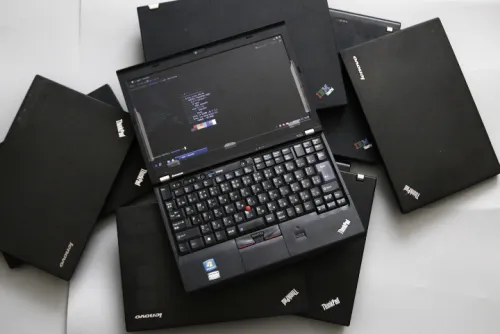
I've been thinking about server setup for a while.
Pros and cons I asked AI about.
Debian:
Pros:

It is a highly reliable and stable OS.
It has a large package management system (APT), making software installation and updates easy.
It has a large community and abundant documentation and support.

Cons:

Version upgrades can be slow.
Default settings are solid and conservative, so standard security settings can be strict.

Slackware:
Pros:

Its simple and straightforward configuration means fewer security risks.
Packages are simple with few dependencies, making customization easy.
It has an active community, providing rich information and support.

Cons:

Configuration files and system operations are unique, leading to a high learning curve.
The update method differs from other distributions, which can be difficult for beginners.

OpenBSD:
Pros:

Designed with a focus on security, ensuring high safety.
Installation and setup are easy, and it comes with a wealth of standard features.
It has an active community with extensive information on safety and security.

Cons:

Software updates can be slow.
Hardware support is limited, making guaranteed operation difficult in some cases.
Hmm. Nothing really jumps out at me.
In terms of scale, Debian is probably good, but Slackware and OpenBSD really resonate with me because of their playful spirit.
Should I try Slackware, which I was interested in before? However, regarding Slackware, I'm not entirely against the idea of making it my daily-driver OS, not just for a server.
Gathering various information.
If there are many users, it will be continuously improved and get better,
and the quality of Ubuntu, for example, has significantly improved.
In contrast, Slackware is currently almost neglected.
This is why there's a difference.
Furthermore, Debian is operated without regard for bug occurrences and quality control, making it very unstable, and sometimes updates can render it unbootable.
Instead of raw Debian, let's use a distribution that is Debian + its own quality control.
Also, Red Hat-based systems like Fedora have many issues when used as a desktop, but they are very easy to use as a server.
Conversely, Ubuntu servers are unusable.
Umm…
CentOS seems to be mainstream now, but I don't feel like I'd enjoy an OS I'm not personally interested in, so I think I'll personally install Slackware first, and then start building it as a server PC.
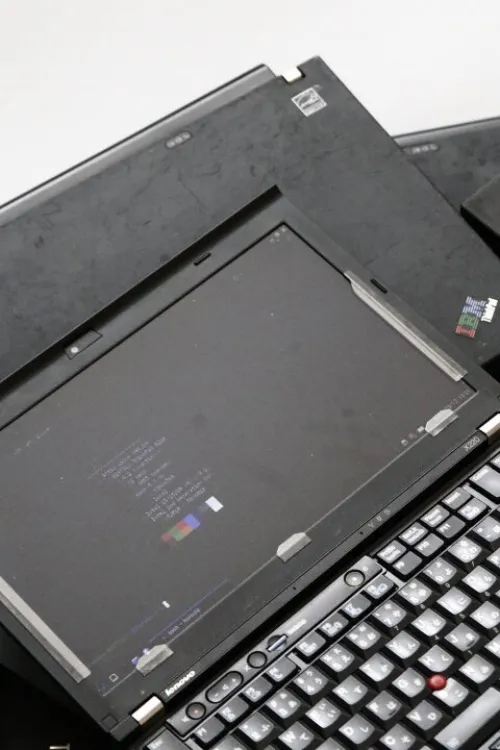
Currently, I have Artix Linux installed on my X220, but when I recently tried to use Premiere and Photoshop after a long time and booted up my X260 with Win10, I was surprised at how slow it was.
Why do I feel so much stress from its performance, even though the X260 is overwhelmingly superior in specs and has more memory?
I do intend to keep one machine for Windows-dependent software, but honestly, once you leave Windows, it's strange how you don't want to go back.
--

A lady gave me sweet potato tempura ・ω・